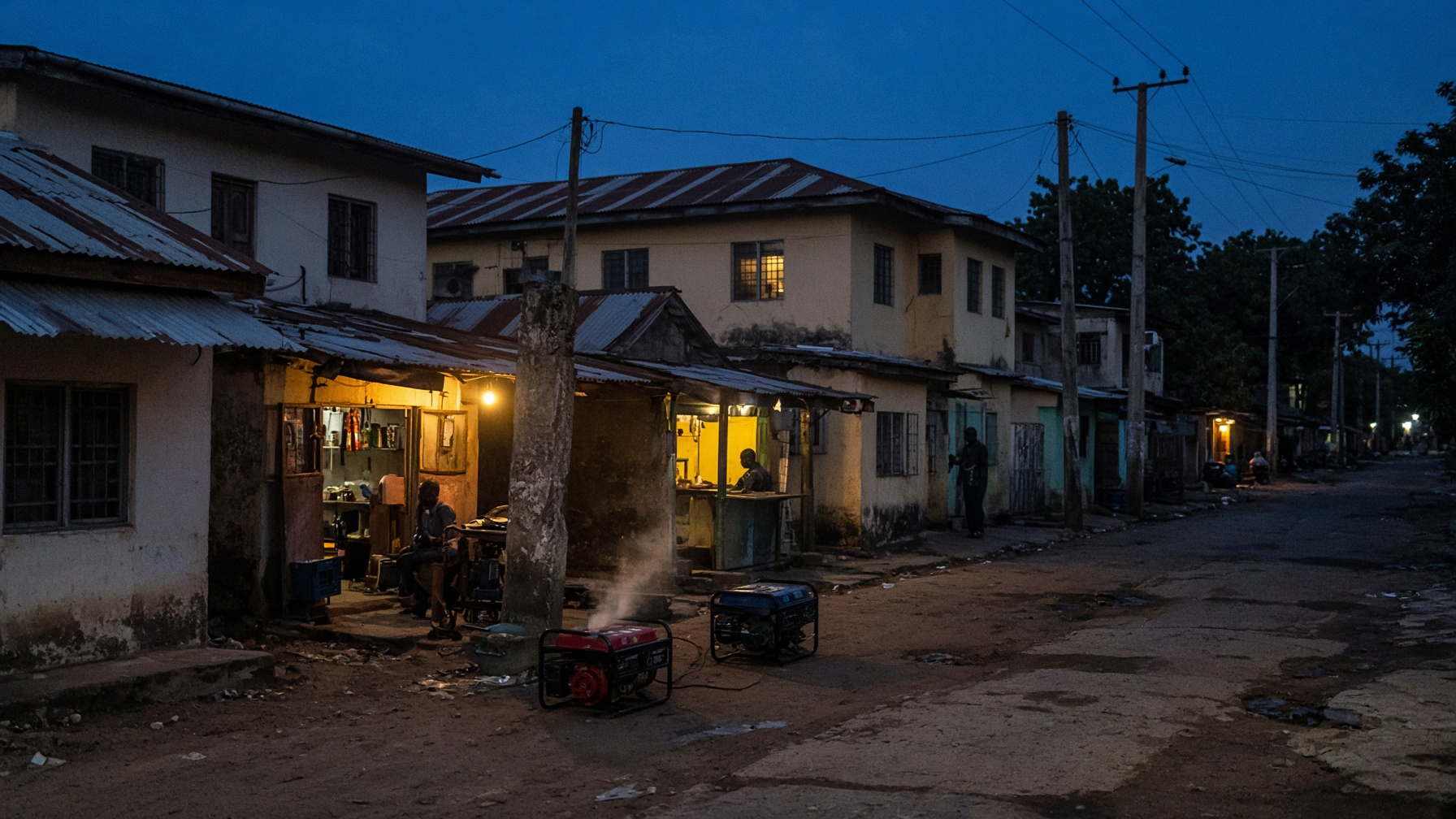
BOJI-BOJI — At blue hour the street does not go dark. It goes petrol. Generators roll out of shops like a ritual, zinc roofs hold the last of the sun, and the cost of a charged phone is named before the price of bread.
Traders told AgborNews the latest stretch lasted fourteen hours. Fish sellers dumped stock. A pharmacy ran a fridge on a neighbour’s machine and paid in fuel. Barbers cut by the light of a single bulb and a phone torch for the edges.
We are not asking for miracles. We are asking for hours.
The feeder that serves this side of town has a reputation. Officials talk about load, vandalism, and a transformer that has been “awaiting” since the last campaign. Residents talk about the hours. “We are not asking for miracles,” a welder said. “We are asking for hours.”
Night clinics feel it first. The labour ward at Central Hospital has a backup that is not a rumour, but the smaller posts in Abavo and Umunede still send patients into town when their own machines fail.
Until the feeders hold, Agbor’s night economy is a petrol economy. The shops stay open. The bill is collected from the same people who already paid the levy, the union and the man who said he was from task force.