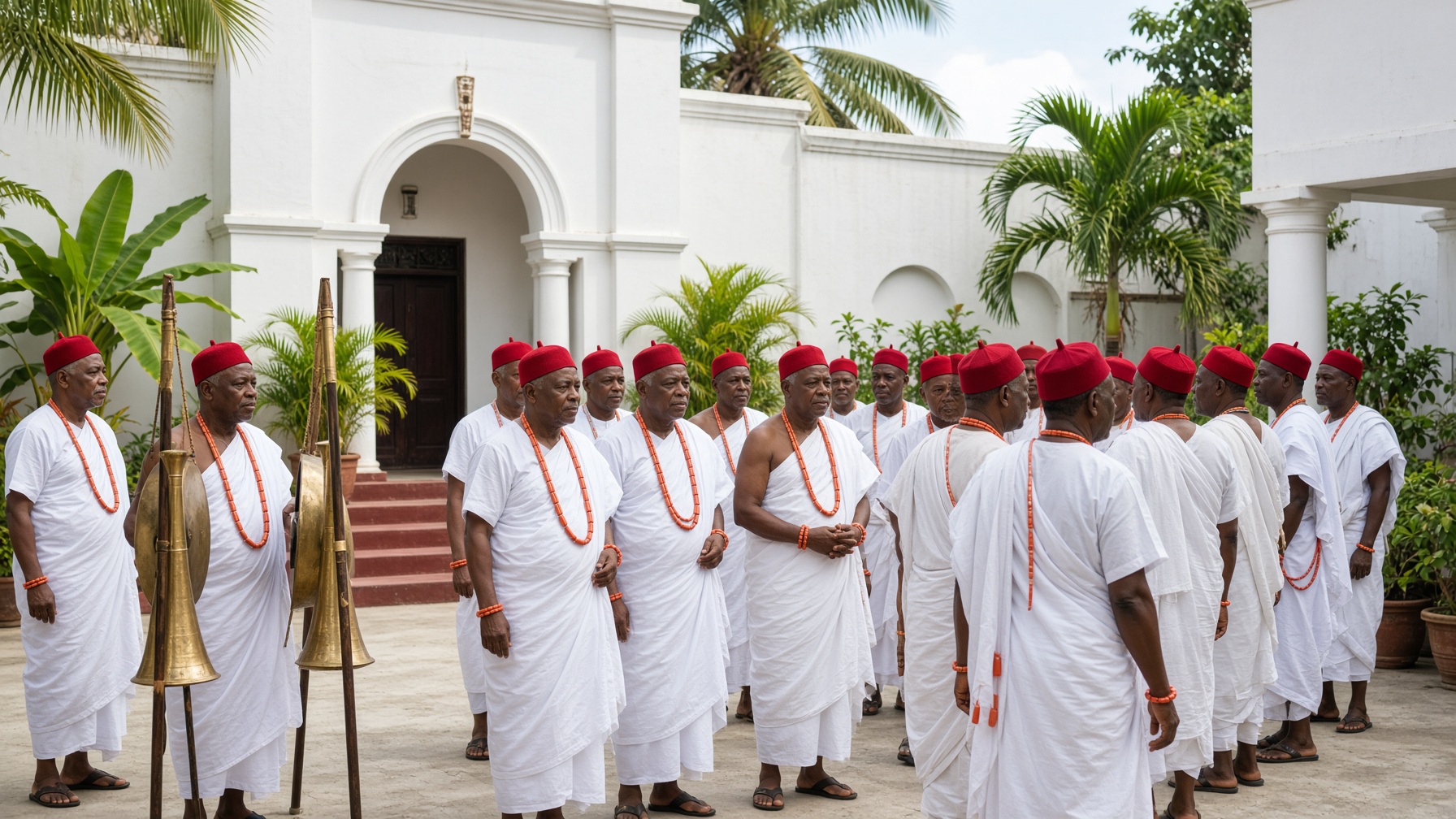
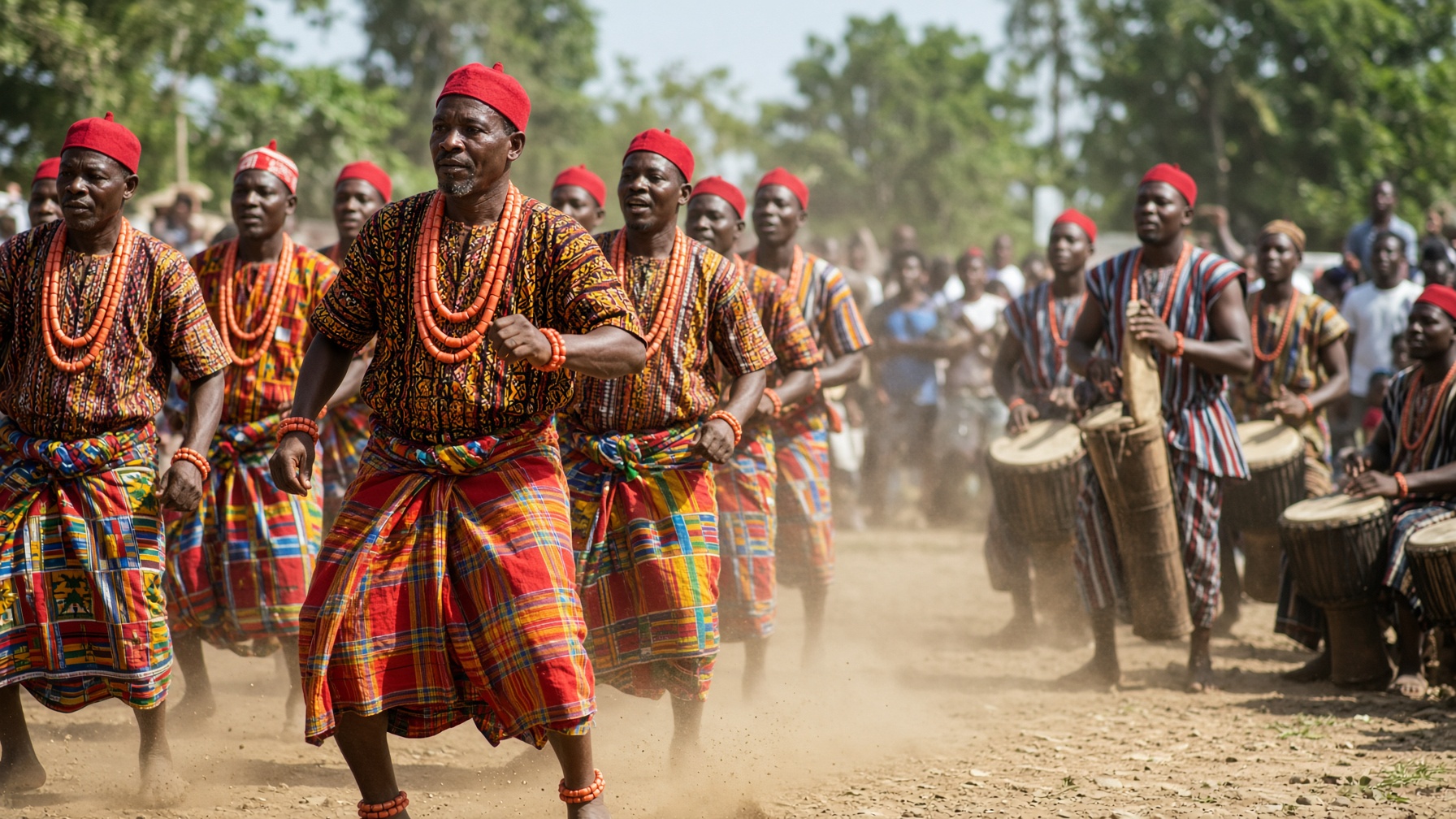
AGBOR — The drums started before the heat broke. On the sand before the palace, Ika dancers in coral beads, ivory cloth and rattles brought the New Yam season in, as families from Agbor, Abavo, Umunede and Owa pressed in to see the first yam lifted, blessed and shared.
It is the festival that still sets the civic calendar here. Politicians who cannot find Agbor in August find it in yam season. This year the palace kept the rite unhurried: libation, dance, the breaking of the yam, then the open sharing that turns strangers into guests.
A people who remember how to thank the earth will remember how to live together.
Elders used the moment to talk about land, not only culture. Several communities on the edge of town have argued over farm boundaries as housing pushes into old plots. “A people who remember how to thank the earth,” one chief said, “will remember how to live together.”
Young people filmed every step. A few wore sneakers under traditional wrappers and nobody minded. That is the Agbor bargain: the rite holds, the dress code flexes, and the yam still comes first.
When the last troupe left the sand, smoke from roasting tubers hung over the approach road. For one afternoon the flyover, the derailment and the failed highway felt far away. Culture, here, is not a museum. It is how Ika nation catches its breath.